
2nd blog post - example only
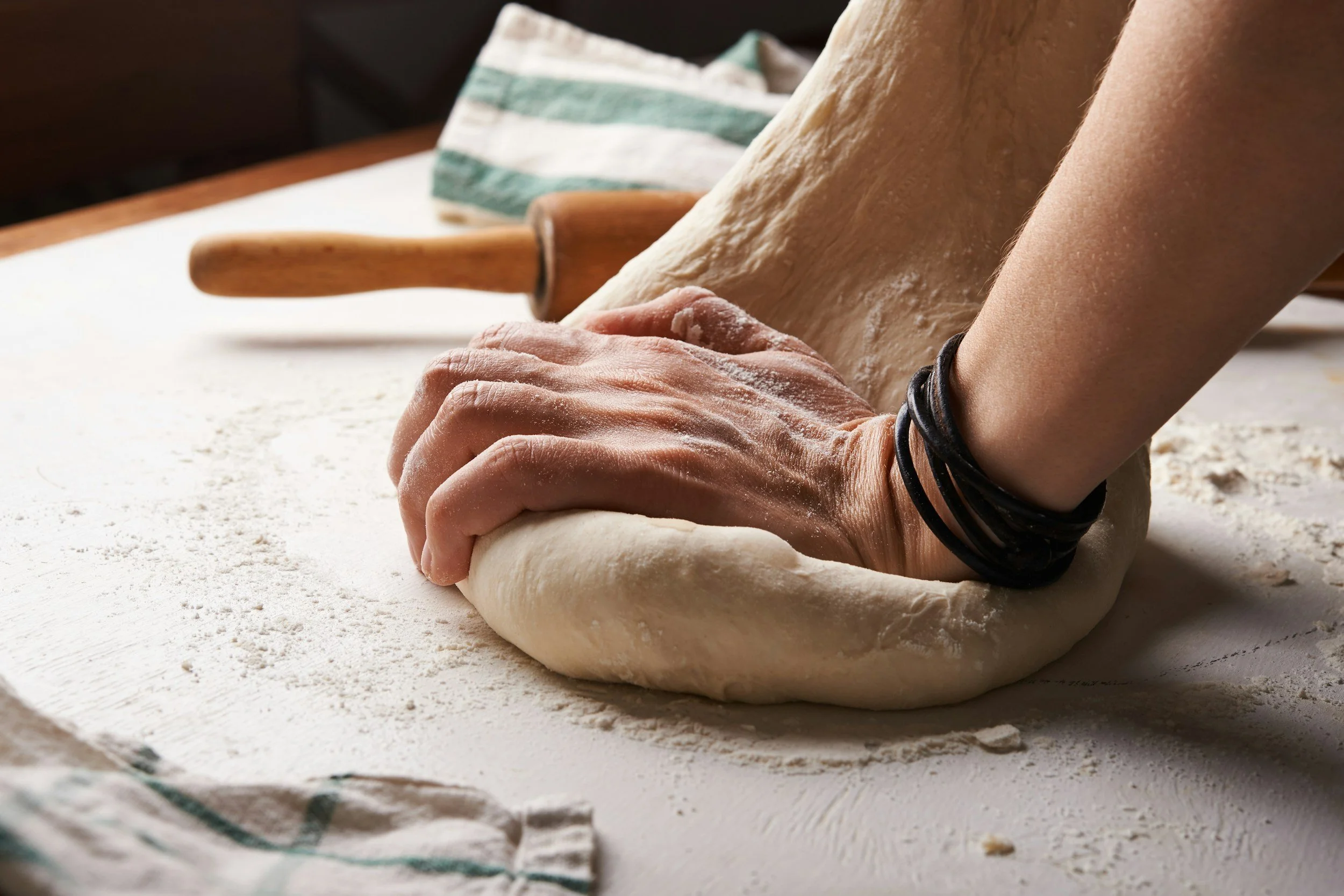
Pâte Brisée, Pâte Sucrée & Pâte Sablée
What’s the Difference—and When Do You Use Each One?
Pâte brisée, pâte sucrée, and pâte sablée are three classic French pastry doughs. On paper, they can look remarkably similar. They all contain flour and butter, and most versions contain some combination of sugar, eggs, or water.
But they are not interchangeable doughs.
Each is formulated and mixed to produce a different texture, level of sweetness, strength, and eating experience.
The easiest way to remember them is:
BRISÉE = PIE CRUST
Crisp, relatively neutral, and slightly flaky.
SUCRÉE = SUGAR COOKIE
Sweet, crisp, sturdy, and clean-cutting.
SABLÉE = SHORTBREAD
Rich, buttery, delicate, and crumbly.
And those differences tell us exactly where each dough works best.
First: What Does “Short” Pastry Mean?
All three belong to the broad family of short pastries.
“Short” doesn't describe the size of the pastry. It describes the way the pastry breaks when eaten.
Bread dough develops a strong gluten network that allows it to stretch and chew.
In short pastry, we deliberately interfere with that gluten development.
Fat coats flour particles and limits their ability to absorb water and form gluten. Sugar also competes for available moisture, while restrained mixing prevents excessive gluten development.
The result is a pastry that breaks rather than stretches.
But by changing the amount of fat, sugar, egg and water — and changing the way we mix them — we can create very different kinds of “shortness.”
PÂTE BRISÉE: The Crisp, Versatile Pastry
Remember: BRISÉE = PIE CRUST
Pâte brisée is the least sweet and most pie-crust-like of these three doughs.
The formula shown here begins with pastry flour and cold butter. The butter is cut or rubbed into the flour until the mixture resembles fine breadcrumbs before the liquid ingredients are added.
That is an important distinction.
We are deliberately leaving tiny pieces of cold butter dispersed throughout the flour rather than completely blending the butter into the dough.
When the pastry enters the oven, the butter melts and the water contained in the butter and dough turns to steam. This helps create tiny separations within the structure.
The result is a pastry that is:
crisp, tender, slightly flaky, and relatively neutral in flavor.
It should feel like pastry — not like a cookie.
When Would I Use Pâte Brisée?
Pâte brisée is my choice when I want the filling to be the star and the crust to provide a crisp, buttery foundation.
Because it contains relatively little sugar, it works beautifully with both sweet and savory preparations.
Sweet uses include:
Fresh fruit tarts where the filling provides most of the sweetness
Apple tarts
Pear tarts
Rustic fruit tarts and galettes
Custard-based tarts
Some cream or pastry-cream-filled tarts
Traditional pie-style preparations
Savory uses include:
Quiche
Savory tartlets
Vegetable tarts
Cheese tarts
Tomato tarts
Meat or poultry pies
Savory galettes
For savory applications, the sugar can be greatly reduced or omitted depending upon the formula.
Choose brisée when you are thinking:
“I need a pastry crust.”
If you could imagine the preparation working with a good pie crust, pâte brisée is probably a strong candidate.
PÂTE SUCRÉE: The Sweet, Sturdy Tart Shell
Remember: SUCRÉE = SUGAR COOKIE
Sucrée means sweetened, and pâte sucrée contains considerably more sugar than pâte brisée.
But sugar isn't the only distinction.
The mixing method changes.
Instead of cutting cold butter into the flour, pâte sucrée generally begins by mixing softened butter and confectioners' sugar until smooth. Egg is incorporated, followed by the flour.
The butter therefore becomes much more uniformly distributed throughout the dough.
The finished pastry is:
sweet, crisp, fine-textured, sturdy, and clean-cutting.
Rather than eating like pie crust, pâte sucrée has more of the character of a refined sugar cookie.
And that sturdiness makes it particularly valuable in professional pastry work.