
Pastry Cream (Crème Pâtissière): Understanding the Method, the Science, and the Technique
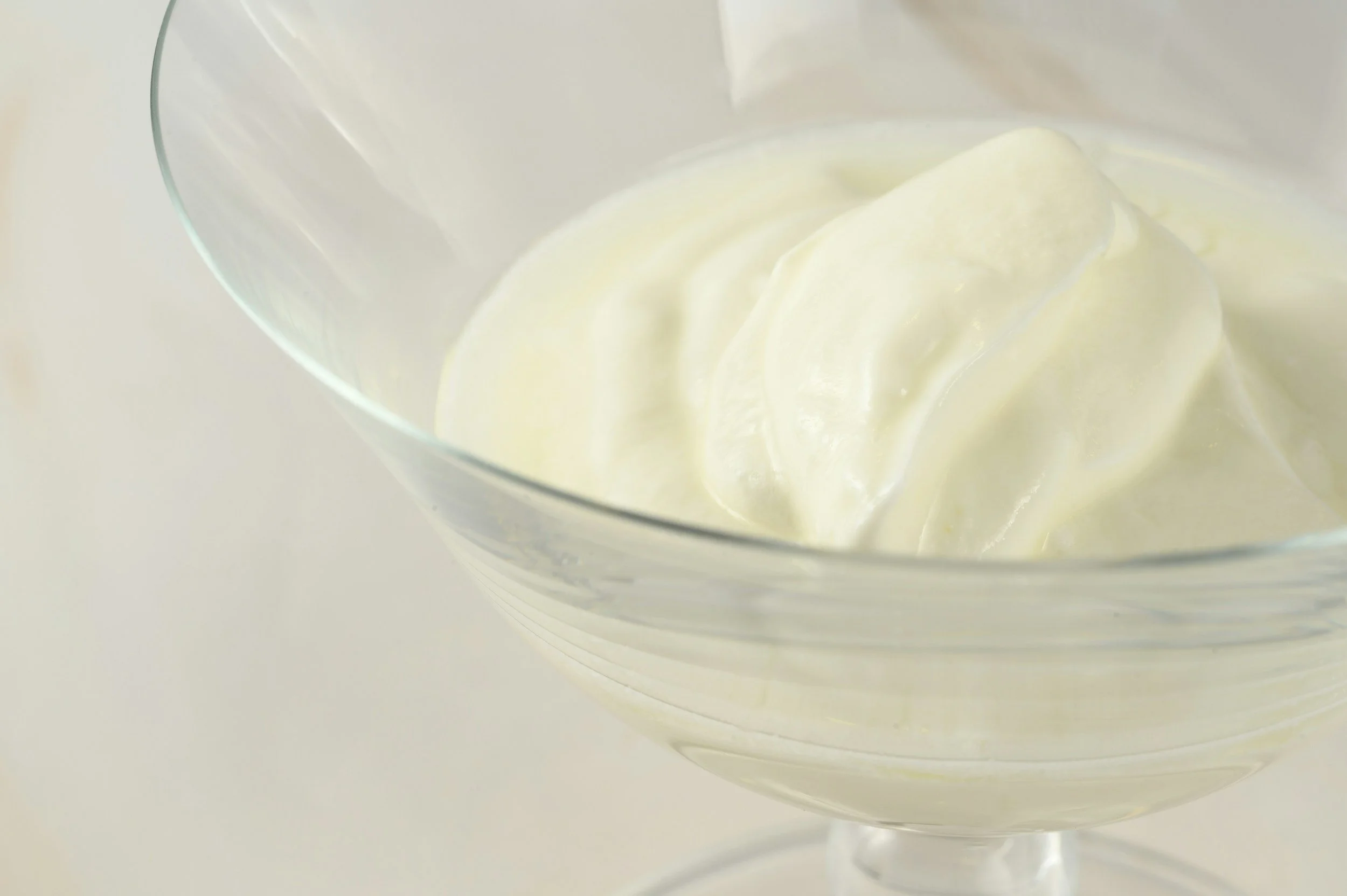
Pastry cream—crème pâtissière—is one of the foundational preparations of classical pastry. On the surface, it appears simple: milk, sugar, eggs, cornstarch, butter, and vanilla. But pastry cream is really an exercise in controlling temperature, starch gelatinization, egg-protein coagulation, and emulsification.
Once you understand what each ingredient is doing and why the steps happen in a particular order, pastry cream becomes much more predictable.
The formula I use here is based on 1 liter of milk and produces approximately 1.12 liters, or about 1⅛ quarts, of finished pastry cream.
The Formula
Milk: 1 L
Sugar: 125 g, for the milk
Egg yolks: 90 g
Whole eggs: 125 g
Cornstarch: 75 g
Sugar: 125 g, for the egg mixture
Butter: 60 g
Vanilla extract: 15 mL
Notice something important about this formula: the sugar is divided.
Half goes into the milk, while the other half is whisked with the eggs. That division isn't arbitrary—it helps us control both the milk and the eggs during preparation.
What Exactly Is Pastry Cream?
Pastry cream is a starch-thickened custard.
That distinction matters.
A crème anglaise, for example, is thickened primarily by egg proteins. Pastry cream contains eggs too, but cornstarch provides much of its structure. Because starch protects the egg proteins to some extent and requires sufficient heat to gelatinize properly, pastry cream can—and should—be brought to a boil.
This is one of the most important concepts for students to understand.
When making many egg custards, we are taught:
Don't let it boil or the eggs will scramble.
With pastry cream, however, the rule changes:
It needs to boil.
The starch makes that possible.
Understanding the Ingredients
Milk: The Foundation
Milk makes up the largest portion of the formula and provides the liquid in which everything else functions.
Its water hydrates the cornstarch so the starch granules can swell and gelatinize. Milk also contributes proteins, lactose, and milk fat, all of which affect flavor, richness, color, and mouthfeel.
Whole milk is generally preferred because it produces a pastry cream that is rich without becoming excessively heavy.
Sugar: More Than Sweetness
This formula contains 250 g total sugar, divided into two 125 g portions.
The first portion is added to the milk.
Besides providing sweetness, sugar influences the behavior of proteins and starches and helps create the smooth texture we associate with pastry cream.
The second portion is whisked with the eggs.
There is another important reason for working promptly once sugar comes into contact with eggs.
Sugar is hygroscopic—it attracts water. If concentrated sugar is allowed to sit on egg yolks without being mixed, it can draw moisture from the surface of the yolks and create firm little particles. Pastry chefs sometimes describe this as the sugar “burning” the yolks.
It isn't actually burning them with heat, but the resulting particles can remain in the finished custard.
So once sugar meets eggs:
Whisk immediately.
Why Both Egg Yolks and Whole Eggs?
This particular formula uses both:
90 g egg yolks
and
125 g whole eggs
They perform slightly different jobs.
Egg yolks provide richness, color, emulsifiers, fat, and tenderness. Yolks contain lecithin, a powerful natural emulsifier that helps create that beautiful creamy mouthfeel.
Whole eggs contribute additional proteins, including proteins from the whites. Those proteins provide more structure.
The combination creates a pastry cream that is rich but also firm enough to hold its shape—an important quality when the cream will be used for éclairs, cream puffs, fruit tarts, Napoleons, and other pastries.
Cornstarch: The Primary Thickener
The formula contains 75 g cornstarch per liter of milk, making this a substantial, pastry-style cream rather than a loose custard sauce.
Cornstarch granules initially remain suspended in the liquid.
As the mixture heats, the granules absorb water.
They begin to swell.
Eventually they gelatinize, causing the custard to thicken dramatically.
This is why pastry cream often seems fairly liquid one moment and suddenly becomes very thick.
But there is an important second part to the story.
Simply reaching the first sign of thickening isn't enough.
The pastry cream must be allowed to come to a boil and cook briefly while being whisked continuously. This completes the starch gelatinization and removes the raw, chalky or starchy flavor that undercooked cornstarch can leave behind.
Butter: Added After Cooking
The 60 g butter is added after the pastry cream has been removed from the heat.
Butter contributes richness, flavor, shine, and a softer, more luxurious mouthfeel.
Adding it at the end also allows the butterfat to become incorporated into the already-thickened custard rather than interfering with the initial starch-thickening process.
Whisk it in until completely incorporated and the pastry cream becomes smooth and glossy.
Vanilla: Protect the Aroma
The vanilla extract is also added after cooking.
Vanilla contains volatile aromatic compounds. Prolonged boiling can drive some of those aromas away.
Adding vanilla toward the end preserves more of its fragrance and flavor.
If using a vanilla bean instead of extract, the approach can be different: the bean and seeds can be infused directly into the milk so their flavor has time to develop.
Preparing the Pastry Cream
Step 1: Heat the Milk and First Portion of Sugar
Place the 1 liter milk and 125 g sugar into a heavy-bottomed saucepan.
A heavy saucepan is important because dairy products scorch easily. Thin pans create hot spots that can burn the milk proteins and sugar on the bottom before the rest of the mixture has heated evenly.
Heat the milk mixture until it is very hot and approaching a simmer.
Stir periodically, making sure to reach the bottom and corners of the saucepan.
We are preparing the milk for tempering; it does not need to spend an extended period boiling.
Step 2: Prepare the Egg Mixture
While the milk heats, combine the 90 g egg yolks, 125 g whole eggs, and remaining 125 g sugar.
Whisk them together immediately.
The mixture should become smooth and homogeneous.
Next, sift the 75 g cornstarch before incorporating it.
Cornstarch tends to compact and form small lumps during storage. Sifting helps prevent those lumps from becoming stubborn little pockets of dry starch in the custard.
Whisk the cornstarch thoroughly into the egg-and-sugar mixture until completely smooth.
At this point we have created the thickening base for our pastry cream.
Step 3: Temper the Eggs
Now comes one of the most important techniques in custard making: tempering.
We have two mixtures at dramatically different temperatures:
hot milk
and
relatively cool eggs.
If all of the hot milk were dumped directly into the eggs at once, portions of the egg proteins could coagulate before we had a chance to distribute the heat evenly.
Instead, gradually pour some of the hot milk into the egg mixture while whisking continuously.
This slowly raises the temperature of the eggs.
Once the egg mixture has been warmed substantially, gradually whisk in more of the hot milk.
The tempered mixture can then be returned to the saucepan.
Tempering isn't actually about “preventing the eggs from getting hot.”
We absolutely want them to get hot.
It is about raising their temperature gradually and evenly.
Step 4: Return Everything to the Heat
Pour the tempered mixture back into the saucepan and return it to the stove.
Now the pastry cream requires your full attention.
Whisk continuously.
Make sure the whisk reaches:
the bottom of the saucepan,
the corners,
and the area where the bottom meets the sides.
Those are the places where pastry cream thickens first and where scorching or lumps are most likely to develop.
As the temperature rises, you will notice the mixture beginning to change.
At first it will look relatively fluid.
Then it will begin to coat the whisk.
Then the starch will gelatinize rapidly and the mixture will become dramatically thicker.
Keep whisking.
Step 5: Bring the Pastry Cream to a Boil
This is the point where students sometimes become nervous.
The pastry cream becomes thick and begins bubbling.
That is exactly what we want.
Once it reaches a boil, continue cooking briefly—generally about 1 to 2 minutes—while whisking constantly.
Those bubbles may look more like small volcanic eruptions than the rolling boil you would see in water because the pastry cream is now very thick.
Cooking through this stage accomplishes several things:
The cornstarch fully gelatinizes.
The raw starch flavor cooks away.
The pastry cream reaches its proper final structure.
There is another fascinating piece of food science occurring here.
Egg yolks contain an enzyme called alpha-amylase, which can break down starch. If a starch-thickened custard is insufficiently cooked, that enzyme can remain active and gradually weaken the starch structure.
The result can be pastry cream that looked perfectly thick when you made it but later became surprisingly loose.
Adequate cooking helps deactivate that enzyme.
So that brief boiling period isn't simply a traditional instruction.
It has a scientific purpose.
Step 6: Remove From the Heat and Finish
Once the pastry cream has cooked sufficiently, remove the saucepan from the heat.
Add the 60 g butter and 15 mL vanilla extract.
Whisk until the butter has completely melted and emulsified into the pastry cream.
The finished cream should look:
smooth, thick, glossy, and completely homogeneous.
At this stage, if there are any small lumps, the pastry cream can be passed through a fine-mesh strainer while it is still warm.
That is much easier than trying to correct lumps once the cream has chilled and set.
Cooling Pastry Cream Properly
Pastry cream should not be left sitting in a deep saucepan to cool slowly.
Transfer it immediately into a clean, shallow container or sheet pan so that the greater surface area allows it to cool more rapidly.
Then cover the surface directly with plastic film.
The plastic should actually touch the pastry cream.
Why?
If the surface is exposed to air, moisture evaporates from the top layer. That layer dries and forms a rubbery skin.
Once that skin develops, whisking it back into the pastry cream can create lumps.
Direct-contact plastic prevents that surface dehydration.
Refrigerate the pastry cream promptly and chill thoroughly.
What Happens as Pastry Cream Cools?
Freshly cooked pastry cream is thick, but it becomes considerably firmer as it chills.
That is normal.
The starch structure continues to set as the temperature decreases, while the butterfat also firms.
When you first remove chilled pastry cream from the refrigerator, it may appear almost too firm.
Before using it, gently whisk it until smooth and creamy again.
The goal is not to aggressively whip air into it.
You are simply restoring its creamy consistency.
Pastry Cream as a Building Block
One reason pastry cream is so important in classical pastry is that it becomes the foundation for many other preparations.
It can be used directly for:
éclairs
cream puffs
fruit tarts
Napoleons
cream pies
layered desserts
and numerous filled pastries.
But pastry cream can also be transformed.
Fold pastry cream with whipped cream and you move toward diplomat-style cream.
Combine it with butter and you can create mousseline cream.
Combine pastry cream with an appropriate gelatin-stabilized whipped component and it can become part of other classical cream preparations.
Learning pastry cream therefore isn't simply learning one recipe.
It is learning one of the fundamental building blocks of pastry.
Understanding the Finished Texture
Proper pastry cream should be thick enough to hold its shape but still creamy.
It should not be:
rubbery,
grainy,
watery,
starchy tasting,
or scrambled.
When whisked after chilling, it should return to a smooth, luxurious consistency.
A properly prepared pastry cream should feel rich on the tongue without feeling like paste.
That balance comes from the interaction of the eggs, milk, starch, sugar, and butter—not from any one ingredient alone.
Troubleshooting Pastry Cream
My Pastry Cream Is Lumpy
Possible causes:
The cornstarch wasn't sifted.
The cornstarch wasn't completely incorporated into the egg mixture.
The milk was added too quickly during tempering.
The pastry cream wasn't whisked continuously while cooking.
The corners and bottom of the saucepan weren't reached with the whisk.
Solution:
If the lumps are minor, immediately pass the warm pastry cream through a fine-mesh strainer.
Prevention, however, is much easier than correction.
My Eggs Scrambled
The eggs were exposed to too much heat too quickly.
This usually occurs during tempering or when the mixture is returned to excessively high heat without adequate whisking.
Add the hot milk gradually while whisking continuously.
Remember:
Tempering controls the rate at which the eggs heat.
My Pastry Cream Is Too Thin
Several things could have happened.
The pastry cream may not have reached a true boil.
It may not have cooked long enough after thickening.
The cornstarch may have been measured incorrectly.
The pastry cream may also simply still be warm.
Remember that pastry cream becomes considerably firmer after refrigeration.
Do not judge its final consistency while it is still hot.
My Pastry Cream Was Thick but Became Thin Later
This is particularly interesting.
One possible cause is insufficient cooking after the pastry cream thickened.
The alpha-amylase enzyme naturally present in egg yolks can break down starch. Adequate heating deactivates the enzyme.
If the custard is removed from the heat too early, the enzyme may continue attacking the starch structure, causing the pastry cream to loosen during storage.
This is another reason we intentionally cook pastry cream through the boiling stage.
My Pastry Cream Tastes Like Cornstarch
It was most likely undercooked.
Starch needs sufficient cooking after gelatinization to eliminate that raw, chalky flavor.
Once the pastry cream reaches a boil, continue cooking briefly while whisking constantly.
My Pastry Cream Has a Burned Flavor
The bottom of the saucepan probably scorched.
Use a heavy-bottomed saucepan and keep the pastry cream moving continuously once the tempered mixture returns to the heat.
If you suspect scorching, do not scrape the burned material from the bottom of the pan into the pastry cream.
Transfer the unaffected cream to another container immediately.
My Pastry Cream Has a Skin on Top
The surface was exposed to air while cooling.
Place plastic film directly against the surface of the warm pastry cream before refrigerating.
My Chilled Pastry Cream Looks Too Firm
This may be completely normal.
Cornstarch sets firmly when chilled, and the butter also solidifies somewhat.
Whisk the chilled pastry cream gently until it becomes smooth and creamy.
Do not automatically add milk or cream to loosen it. Additional liquid changes the formula and can make the cream too loose for its intended application.
My Pastry Cream Is Grainy
Graininess can result from overheated egg proteins, poor tempering, insufficient whisking, or small starch lumps.
Control the heat, whisk continuously, and strain the finished cream while warm if necessary.
The Most Important Pastry Cream Lesson
Pastry cream is a perfect example of why understanding technique is more valuable than simply memorizing instructions.
We temper because we need to control egg-protein coagulation.
We boil because we need proper starch gelatinization and enzyme deactivation.
We whisk constantly because thick mixtures heat unevenly and can scorch or form lumps.
We add butter at the end to create richness and a smooth emulsion.
We add vanilla after cooking to preserve its aromatic compounds.
And we cool the pastry cream rapidly with plastic film directly on the surface to protect both food safety and texture.
Once you understand those principles, pastry cream stops being a recipe you hope will work.
It becomes a process you know how to control.
And that is really the point of learning pastry methods: not simply knowing what to do, but understanding why you are doing it